How Crafting Helps Develop Fine Motor Skills in Children

When people think about crafting with children, they usually focus on what they’re making.
A painted dinosaur. A bracelet. A decorated DIY door hanger. Something colourful to proudly display on the fridge.
After more than 17 years teaching Montessori, I tend to look at the same craft a little differently.
I look at the hands that made it.
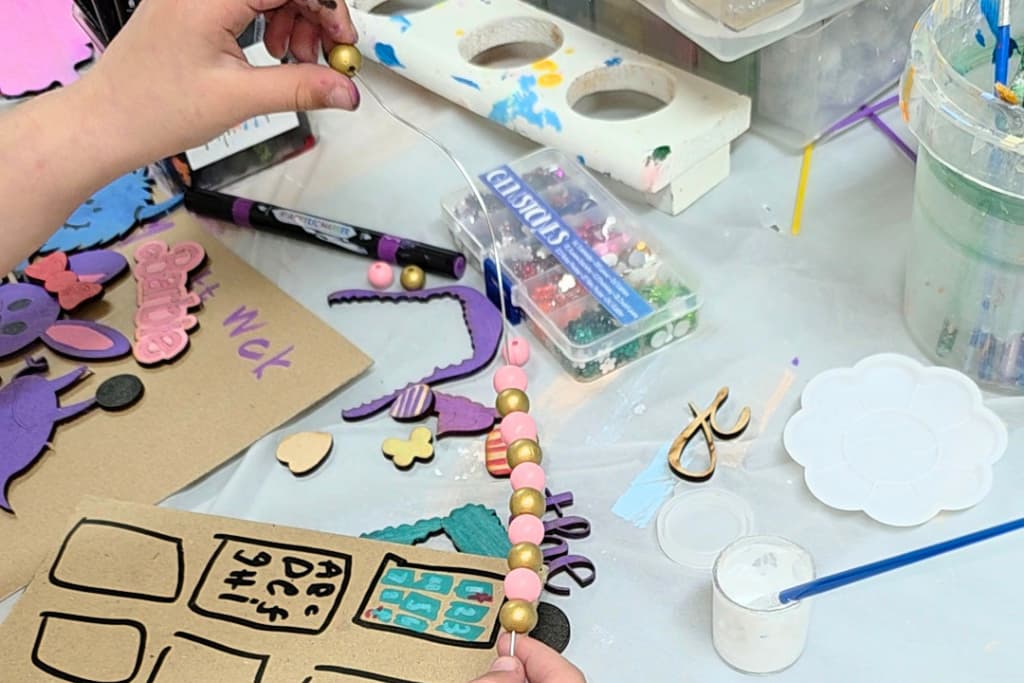
The fingers picking up a tiny bead. The hand controlling a paintbrush around an edge. Two hands working together to thread ribbon. The fingers squeezing a glue bottle and learning how much pressure to use.
To a child, they’re simply making something.
But underneath all that painting, threading, squeezing and sticking, their hands are getting an incredible amount of practice.
And that’s the part of crafting I think we sometimes miss.
Fine Motor Skills Aren’t Just About Holding a Pencil
When I was teaching Montessori, I was probably guilty of explaining fine motor development to parents by saying:
“It will help them learn to eventually hold a pencil properly.”
And that’s true. But it’s only a tiny part of the picture.
Fine motor skills are the small, controlled movements we make with our hands, fingers and wrists. We use them to button coats, use cutlery, open packaging, tie shoelaces and write.
For children, that control is still developing.
Long before they pick up a pencil, they need opportunities to grip, pinch, squeeze, twist, pull, press, thread and manipulate objects.
Their hands become more capable by using them.
And children don’t need to know they’re “working on their fine motor skills”.
They just need opportunities to use their hands.
The Practice Has a Purpose
This is one of the reasons I’ve always loved crafting with children.
Ask a child to pick up 20 tiny objects and carefully position them one at a time and it sounds like an exercise.
Give that same child one of our wooden craft kits and decorations they’re desperate to add, and suddenly it’s completely different.
The movement is the same, but the practice has a purpose.
They’re not picking up that tiny piece because an adult wants them to practise their finger control.
They’re picking it up because they know exactly where they want it to go.
To them, it’s a craft. To their hands, it’s practice.
What’s Actually Happening in Their Hands?
It’s something I notice all the time with our DIY wooden craft kits.
One project might involve painting, picking up small decorations, squeezing glue, turning and positioning wooden pieces, assembling different parts or threading ribbon and beads.
That means their hands are practising:
- Pinching and picking up small pieces.
- Gripping and controlling brushes, pens and tools.
- Squeezing and pressing paint, glue and decorations.
- Twisting and manipulating wooden pieces.
- Using both hands together to hold, thread and assemble.
- Hand-eye coordination to get things where they want them to go.
The child sees one craft project.
I see lots of different opportunities for those little hands to work.

Grip, Control and Pressure
Picking up a bead requires a different movement from holding a paintbrush. Squeezing a glue bottle requires something different again.
Painting asks children to grip and control a tool, changing their movements depending on whether they’re covering a large area or working around a small detail.

Squeezing glue or paint, pressing pieces together and manipulating materials require different amounts of pressure.
Too much. Too little. Try again.
The materials give children feedback and their hands adjust accordingly.

Getting Both Hands to Work Together
Crafting also asks children to use both hands together.
One hand holds while the other paints. One keeps a piece steady while the other positions it. One holds the bead while the other controls the cord.
Both hands have different jobs, but they need to work together.

positioning pieces with the other.
We use this kind of coordination every day when opening containers, tying shoelaces, cutting food and getting dressed.
Crafting simply gives children another natural opportunity to practise it.
And Then Their Eyes Have to Join In
Their hands aren’t working alone.
Threading a bead means seeing the hole and guiding the cord towards it. Painting an edge means seeing where the brush needs to go and controlling the hand closely enough to get it there.
Sometimes they miss.
They adjust and try again.
With repeated opportunities to paint, thread, squeeze, build, peel, stick and create, those movements can gradually become more controlled.
What If They Find It Difficult?
Something that looks simple to us can require enormous concentration from little hands.
If an activity is too difficult, make the challenge slightly more achievable rather than automatically doing it for them.
Use larger beads, loosen a difficult lid, start the ribbon through the hole or hold something steady while they complete the fiddly part.
Then gradually step back as it becomes easier.
You don’t need to turn craft time into a developmental assessment either. Instead of worrying about whether your child is doing something “correctly”, notice whether movements become easier and more controlled over time.
That’s the progress worth watching.
You Don’t Need Special Fine Motor Exercises
Supporting fine motor development doesn’t necessarily mean adding another educational activity to your day.
Children need opportunities to use their hands.
Paint. Thread. Pinch. Peel. Stick. Squeeze. Build. Sort. Roll. Press. Twist. Create.
Crafting happens to bring many of those movements together in something children actually want to do.
The Next Time They Show You What They’ve Made…
When your child proudly holds up their finished craft, you’ll probably see the dinosaur, bracelet or slightly wonky door hanger they’ve created.
But maybe you’ll notice the hands that made it too.
The fingers that picked up the tiny pieces. The hand that controlled the brush. The two hands that worked together. All the squeezing, pressing, twisting and positioning that happened along the way.
Maybe the paint isn’t perfectly even.
Maybe there’s considerably more glue than was actually required!
That’s okay.
The finished craft shows us what they made. It doesn’t show us everything their hands had to learn to make it.
To them, they’re simply creating something they’re proud of.
But those little hands are practising for all sorts of bigger things still to come.
Bringing More Hands-On Activities Into Their Day
That’s one of the reasons we design different types of DIY wooden craft kits. Each one gives children different ways to use their hands, from painting and decorating to squeezing, threading, positioning and assembling.
The child isn’t thinking about any of that.
They’re thinking about what they’re making and exactly how they want it to look.
To them, it’s a craft. To their hands, it’s practice.
If you’d like to explore what happens beyond fine motor development, you can also read our Life Skills for Children Through Crafting blog, where I look at independence, curiosity, concentration and problem-solving through hands-on creative experiences.
Because sometimes the most valuable part of a craft isn’t the thing a child takes home.
It’s everything that happened while they were making it.

